Sunday, May 30, 2021

Intel announces two new 11th-gen chips and a 5G M.2 laptop module at Computex

Intel kicked off this year’s virtual Computex by announcing two new 11th Gen U-Series chips for use in thin, lightweight laptops. It also unveiled its first 5G M.2 module for laptops, designed in a partnership with MediaTek (Intel sold its smartphone modem business to Apple in 2019).

Both of Intel’s new chips have Intel Irix Xe graphics. The flagship model is the Core i7-1195G7, which has base clock speed is 2.9 GHz, but can reach up to 5.0 GHz on a single core using Intel’s Turbo Boost Max 3.0 tech. The other chip, called the Core i5-1155G7, has a base clock speed of 2.5GHzm and a maximum of 4.5GHz. Both chips have four cores and eight threads.

A comparison chart of Intel's new 11th-gen chips

A comparison chart of Intel’s new 11th-gen chips

The 5G M.2 module, called the “5G Solution 5000,” supports 5G NR midband, sub-6GHz frequencies and eSIM tech. Intel has partnerships with telecoms in North America, EMEA, APAC, Japan and Australia. The module is expected to be in laptops produced by Acer, ASUS, HP and other manufacturers by the end of this year, and OEMs are also working on 250 designs based on 11th Gen U-Series chips, expected to hit the market by the holidays.

Specs for Intel's new 5G M.2 module

Specs for Intel’s new 5G M.2 module


from TechCrunch https://ift.tt/34KVTjn

Indian health insurance startup Plum raises $15.6 million in Tiger Global-led investment

The vast majority of people in India, the world’s second most populous nation, don’t have health insurance coverage. A significant portion of the population that does have coverage get it from their employers.

Plum, a young startup that is making it easier and more affordable for more firms in the nation to provide insurance coverage to their employees, said on Monday it has raised $15.6 million in its Series A funding to accelerate its growth. Tiger Global led the funding round.

Existing investors Sequoia Capital India’s Surge, Tanglin Venture Partners, Incubate Fund, Gemba Capital, also participated in the new round, which brings the one-a-half-year-old startup’s to-date raise to $20.6 million. TechCrunch reported earlier this year that Plum was in talks with Tiger Global for the new financing round.

Kunal Shah (founder of Cred), Gaurav Munjal, Roman Saini and Hemesh Singh (founders of Unacademy), Lalit Keshre, Harsh Jain and Ishan Bansal (founders of Groww), Ramakant Sharma and Anuj Srivastava (founders of Livspace), and Douglas Feirstein (founder of Hired) also participated in the new round.

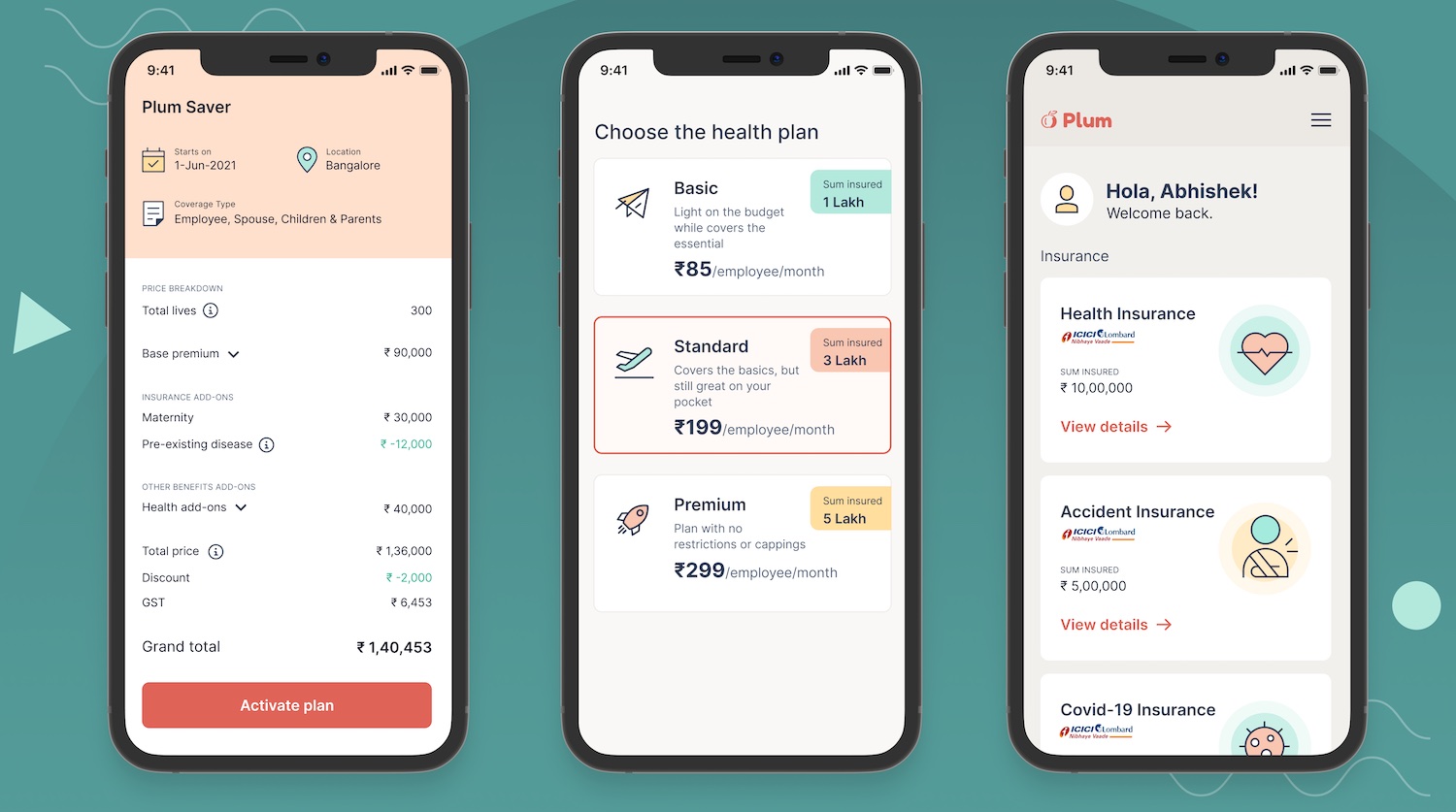
Plum offers health insurance coverage on a B2B2C model. The startup partners with small businesses to provide health insurance coverage to all their employees (and their family members), charging as little as $1 a month for an employee.

The startup has developed the insurance stack from scratch and partnered with insurers to include additional coverage on pre-existing conditions and dental, said Abhishek Poddar, co-founder and chief executive of Plum, in an interview with TechCrunch.

(Like fintech firms, which partner with banks and NBFCs to provide credit to customers, online insurance startups have partnerships with insurers to provide health insurance coverage. Plum maintains partnerships with ICICI Lombard, Care Health, Star Health and New India Assurance.)
Poddar, who has worked at Google and McKinsey, said Plum is making it increasingly affordable and enticing for businesses to choose the startup as their partner. Most insurance firms and online aggregators in India today currently serve consumers. There are very few players that engage with businesses. Even among those that do, they tend to be costlier and not as flexible.

Plum offers its partnered client’s employees the option to top up their health insurance coverage or extend it to additional members of the family. Unlike its competitors that require all the premium to be paid annually, Plum gives its clients the ability to pay each month. And signing up an entire firm for Plum takes less than an hour. (The speed is a key differentiator for Plum. Small businesses have to typically spend months in negotiating with other insurers. Bangalore-based Razorpay has also partnered with Plum to give the fintech startup’s clients a three-click, one-minute option to sign up for insurance coverage.)

The startup plans to deploy the fresh capital to further expand its offerings, making its platform open to smaller businesses with teams as small as seven employees to sign up, said Poddar. The startup plans to cover 10 million people in India with insurance by 2025, and eventually expand to international markets, he said.

India has an under-penetrated insurance market. Within the under-penetrated landscape, digital distribution through web-aggregators today accounts for just 1% of the industry, analysts at Bernstein wrote in a recent report.

“As India’s healthcare insurance industry rapidly expands and transforms, Plum is well positioned to make comprehensive health insurance accessible to millions of Indians. We are excited to partner with Abhishek, Saurabh and the Plum team as they scale their leading tech-enabled platform to employers across the country,” said Scott Shleifer, Partner at Tiger Global, in a statement.

Plum is the latest investment from Tiger Global in India this year. The hedge fund, which has backed over 20 Indian unicorns, has emerged as the most prolific investor in Indian startups in recent months, winning founders with its pace of investment, check size and favorable terms. Last week, the firm invested in Indian social network Koo.


from TechCrunch https://ift.tt/2SFYhVN

Jai Kisan, a fintech startup aimed at rural India, raises $30 million

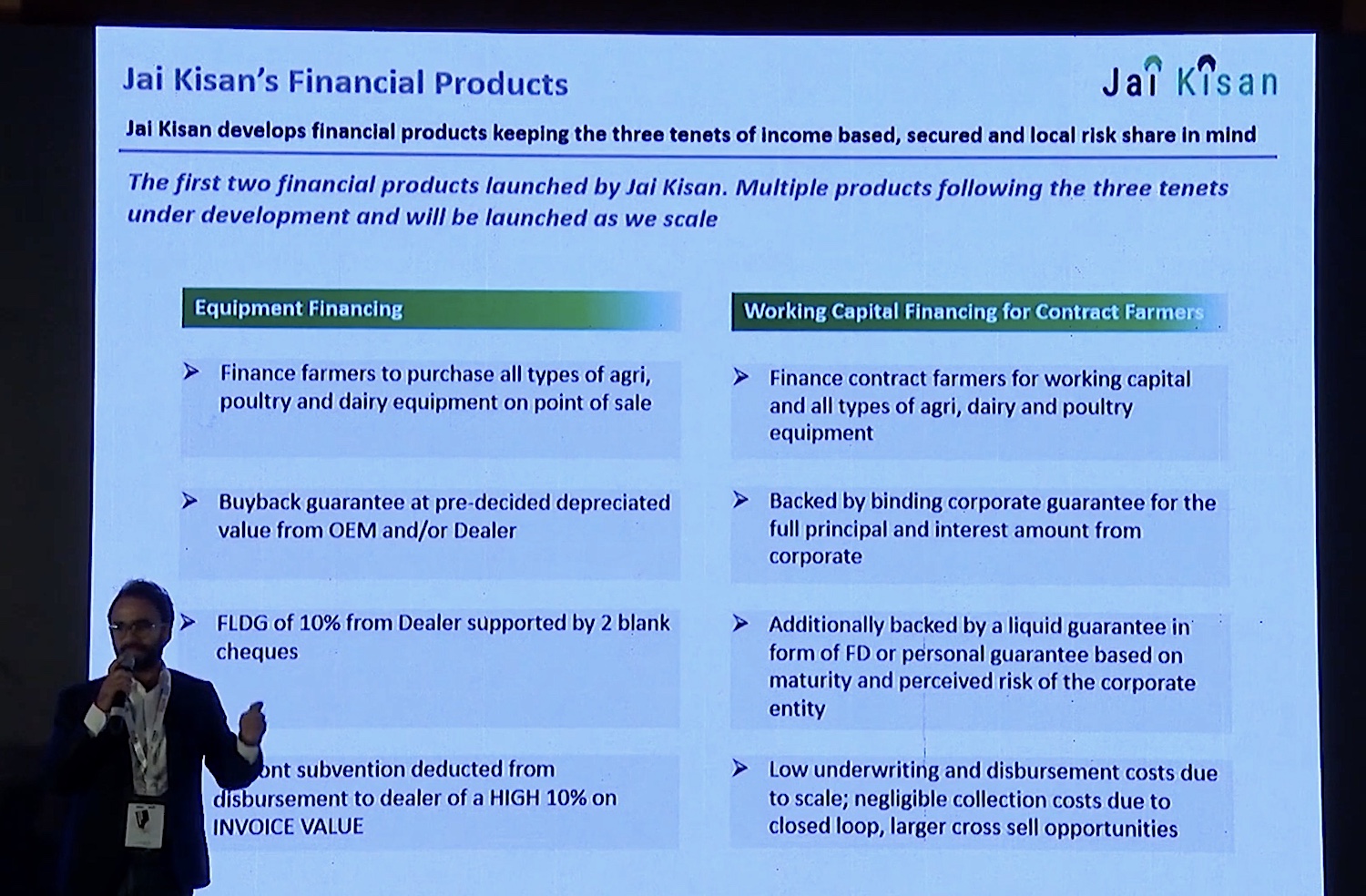
Jai Kisan, an Indian startup that is attempting to bring financial services to rural India, where commercial banks have a single-digit penetration, said on Monday it has raised $30 million in a new financing round as it looks to scale its business.

Hundreds of millions of people in India today live in rural areas. Most of them don’t have a credit score. The professions they work on — largely farming — aren’t considered a business by most lenders in India. These farmers and other professionals also don’t have a documented credit history, which puts them in a risky category for banks to grant them a loan.

Much of the credit these people do raise ends up getting invested in unproductive usage, which leads to higher interest and default rates.

Three-year-old Mumbai-headquartered Jai Kisan is attempting to address this by treating farmers and other similar professionals as businesses instead of consumers.

The startup has developed its own system — which it calls Bharat Khata — that is helping individuals and businesses get access to cheaper financing and ensures that the money they raise is being used for agri-inputs and equipment and other income generating purposes and enablement of rural commerce transactions.

Arjun Ahluwalia, co-founder and chief executive of Jai Kisan, said financial services is crucial for these individuals as their entire economy depends on it. “The ability to buy now and pay later is how most people shop for things in India. Credit is an expectation by the Indian customer — it’s not a value added service,” he told TechCrunch in an interview.

“If there is availability of formal financing to customers, it’s not just customer who does well. The entire ecosystem that revolves around that customer benefits,” he said, pointing to the rise of Bajaj Finance, which has helped several businesses flourish in India by giving credit to customers at the time of purchase, and Xiaomi, India’s largest smartphone vendor, which sells a large number of its devices to customers on monthly instalment plans.

Bharat Khata service, which was launched in April last year, captured more than $380 million of annualized GTV run-rate across over 25,000 storefronts by the financial year that ended in March this year, the startup said.

“Jai Kisan has financed over 15% of the transactions which portrays the monetizability and quality of commerce being captured. The ability to have visibility and virality of high-quality transactions has enabled Jai Kisan to scale business by over 50% in 3 months. The unprecedented growth trajectory stands testament to Jai Kisan’s capabilities to deploy capital efficiently by focusing on core customer credit needs,” the startup said.

The startup, which operates in eight Indian states in South India, is now looking to scale its presence across the country and also increase the headcount. On Monday, it said it had raised $30 million in a Series A round led by Mirae Asset, Syngenta Ventures, and existing investors Blume, Arkam Ventures, NABVENTURES, Prophetic Ventures and Better Capital.

An unspecified amount of the financing was raised as debt from Blacksoil, Stride Ventures, and Trifecta Capital.

“Jai Kisan is at the cusp of disrupting the rural financing industry and we’re glad to be a part of their growth story. Jai Kisan’s stellar growth, excellent asset quality and expanding footprint make them a highly differentiated player in the segment,” said Ashish Dave, chief executive of the India Venture Investments for the South Korean firm Mirae Asset.

“Mirae Asset has always believed in backing companies which aim to become category leaders which is evident from our other investments and we believe Jai Kisan is on the journey of doing so for rural finance,” he added.

Like most fintech startups, Jai Kisan has so far relied on its banking and other financial institutions to finance credit to businesses. The startup said it will now finance 20% of all loans by itself. Which is why it is also raising some money in debt in the new round.


from TechCrunch https://ift.tt/2TulN8x

Watch the Realme X7 Max 5G launch live

Realme will today expand its portfolio of X7 series smartphones with the X7 Max 5G. The company will introduce the smartphone through an online-only event, which will be streamed starting at 12:30PM IST (7AM UTC) on its official YouTube and Facebook accounts. You can follow it with us by tuning in to the stream below. Realme has already revealed the X7 Max 5G's design along with a few specs, including a Dimensity 1200 SoC, 120Hz FullHD+ Super AMOLED screen, 50W charging, and a triple camera setup on the back consisting of 64MP primary, 8MP ultrawide, and 2MP macro units. The X7 Max...


from GSMArena.com - Latest articles https://ift.tt/2SF5yVQ

Top 10 trending phones of week 21

A few short-lived challenges aside, Xiaomi has been the most trending maker on our website for the past month, but this week its domination of our chart reaches new heights. The Chinese maker makes all of the seven most popular phones in our database for the past seven days, which is unprecedented in the entire history of the chart. On top we have the Redmi Note 10 Pro ahead of its non-Pro sibling as the Poco M3 Pro steps down to third. Yet another Poco phone follows with the X3 Pro, while the newly announced Redmi Note8 2021 takes fifth. We then have the Poco F3 and yet another...


from GSMArena.com - Latest articles https://ift.tt/3yOPGAz

Sony Xperia 10 III in for review

Say hello to the freshly-arrived Sony Xperia 10 III. This is Sony's midrange offering and it's one that may look simple to a fault, but is in fact stacked with everything you'd need. Let's unbox it and take it from there. The retail experience is a bit of a letdown for a phone that costs £399/€429 at its pre-order. There's a USB cable, a 7.5W charger that feels straight out of 2008 and nothing else. A case would have been nice. But hey, Sony does bundle a free pair of Sony WH-CH710N noise cancelling headphones with a pre-order. The Sony Xperia 10 III doesn't make a memorable first...


from GSMArena.com - Latest articles https://ift.tt/34vnJQf

Indian logistics giant Delhivery raises $277 million ahead of IPO

Delhivery, India’s largest independent e-commerce logistics startup, has raised $277 million in what is expected to be the final funding round before the firm files for an IPO later this year.

In a regulatory filing, the Gurgaon-headquartered startup disclosed it had raised $277 million in a round led by Boston-headquartered investment firm Fidelity. Singapore’s sovereign wealth fund GIC, Abu Dhabi’s Chimera, and UK’s Baillie Gifford also participated in the new round, a name of which the startup didn’t specify.

The new round valued the 10-year-old startup at about $3 billion. Delhivery — which also counts SoftBank Vision Fund, Tiger Global Management, Times Internet, The Carlyle Group, and Steadview Capital among its investors — has raised about $1.23 billion to date. The startup didn’t comment on Sunday.

Delhivery began its life as a food delivery firm, but has since shifted to a full suite of logistics services in over 2,300 Indian cities and more than 17,500 zip codes.

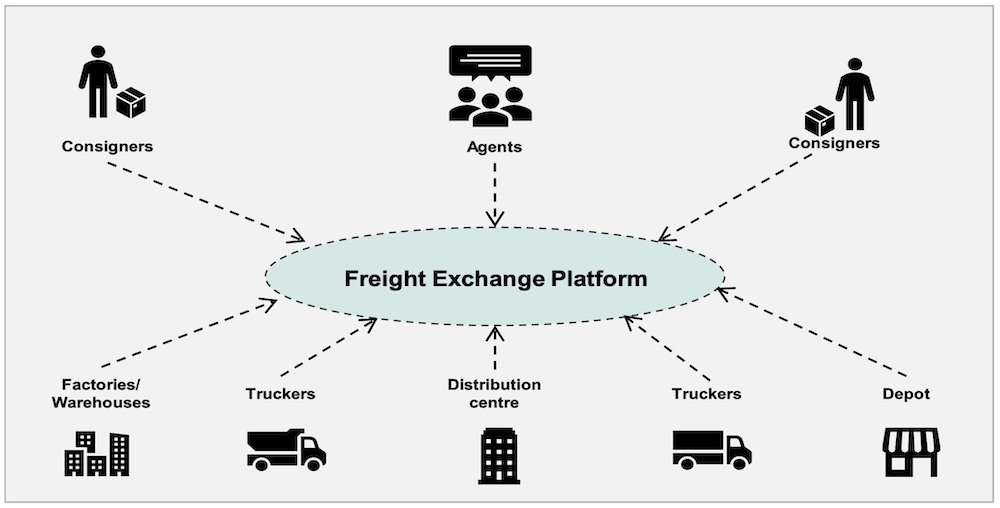
It is among a handful of startups attempting to digitize the demand and supply system of the logistics market through a freight exchange platform.

Research and image: Bernstein

Its platform connects consigners, agents and truckers offering road transport solutions. The startup says the platform reduces the role of brokers, makes some of its assets such as trucking — the most popular transportation mode for Delhivery — more efficient, and ensures round the clock operations.

This digitization is crucial to address the inefficiencies in the Indian logistics industry that has long stunted the national economy. Poor planning and forecasting of demand and supply increases the carrying costs, theft, damages, and delays, analysts at Bernstein wrote in a report last month about India’s logistics market.

Delhivery, which says it has delivered over 1 billion orders, works with “all of India’s largest e-commerce companies and leading enterprises,” according to its website, where it also says the startup has worked with over 10,000 customers. For the last leg of the delivery, its couriers are assigned an area that never exceeds 2 sq km, allowing them to make several delivery runs a day to save time.

Indian logistics market’s TAM (total addressable market) is over $200 billion, Bernstein analysts said.

The startup said late last year that it was planning to invest over $40 million within two years to expand and increase its fleet size to meet the growing demand of orders as more people shop online amid the pandemic.


from TechCrunch https://ift.tt/3p5iC2X