Saturday, May 27, 2023

This week in AI: AI heavyweights try to tip the regulatory scales

Keeping up with an industry as fast-moving as AI is a tall order. So until an AI can do it for you, here’s a handy roundup of the last week’s stories in the world of machine learning, along with notable research and experiments we didn’t cover on their own.

This week, movers and shakers in the AI industry, including OpenAI CEO Sam Altman, embarked on a goodwill tour with policymakers — making the case for their respective visions of AI regulation. Speaking to reporters in London, Altman warned that the EU’s proposed AI Act, due to be finalized next year, could lead OpenAI ultimately to pull its services from the bloc.

“We will try to comply, but if we can’t comply we will cease operating,” he said.

Google CEO Sundar Pichai, also in London, emphasized the need for “appropriate” AI guardrails that don’t stifle innovation. And Microsoft’s Brad Smith, meeting with lawmakers in Washington, proposed a five-point blueprint for the public governance of AI.

To the extent that there’s a common thread, tech titans expressed a willingness to be regulated — so long as it doesn’t interfere with their commercial ambitions. Smith, for instance, declined to address the unresolved legal question of whether training AI on copyrighted data (which Microsoft does) is permissible under the fair use doctrine in the U.S. Strict licensing requirements around AI training data, were they to be imposed at the federal level, could prove costly for Microsoft and its rivals doing the same.

Altman, for his part, appeared to take issue with provisions in the AI Act that require companies to publish summaries of the copyrighted data they used to train their AI models, and make them partially responsible for how the systems are deployed downstream. Requirements to reduce the energy consumption and resource use of AI training — a notoriously compute-intensive process — were also questioned.

The regulatory path overseas remains uncertain. But in the U.S., the OpenAIs of the world may get their way in the end. Last week, Altman wooed members of the Senate Judiciary Committee with carefully-crafted statements about the dangers of AI, and his recommendations for regulating it. Sen. John Kennedy (R-LA) was particularly deferential: “This is your chance, folks, to tell us how to get this right … Talk in plain English and tell us what rules to implement,” he said.

In comments to The Daily Beast, Suresh Venkatasubramanian, Brown University’s director of the Center for Tech Responsibility, perhaps summed it up it best: “We don’t ask arsonists to be in charge of the fire department.” And yet that’s what’s in danger of happening here, with AI. It’ll be incumbent on legislators to resist they honeyed words of tech execs and clamp down where it’s needed. Only time will tell if they do.

Here are the other AI headlines of note from the past few days:

  • ChatGPT comes to more devices: Despite being U.S.- and iOS-only ahead of an expansion to 11 more global markets, OpenAI’s ChatGPT app is off to a stellar start, Sarah writes. The app has already passed half a million downloads in its first six days, app trackers say. That ranks it as one of the highest-performing new app releases across both this year and the last, topped only by the February 2022 arrival of the Trump-backed Twitter clone, Truth Social.
  • OpenAI proposes a regulatory body: AI is developing rapidly enough — and the dangers it may pose are clear enough — that OpenAI’s leadership believes that the world needs an international regulatory body akin to that governing nuclear power. OpenAI’s co-founders argued this week that the pace of innovation in AI is so fast that we can’t expect existing authorities to adequately rein in the technology, so we need new ones.
  • Generative AI comes to Google Search: Google announced this week that it’s starting to open up access to new generative AI capabilities in Search after teasing them at its I/O event earlier in the month. With this new update, Google says that users can easily get up to speed on a new or complicated topic, uncover quick tips for specific questions, or get deep info like customer ratings and prices on product searches.
  • TikTok tests a bot: Chatbots are hot, so it’s no surprise to learn that TikTok is piloting its own, as well. Called “Tako,” the bot is in limited testing in select markets, where it will appear on the right-hand side of the TikTok interface above a user’s profile and other buttons for likes, comments and bookmarks. When tapped, users can ask Tako various questions about the video they’re watching or discover new content by asking for recommendations.
  • Google on an AI Pact: Google’s Sundar Pichai has agreed to work with lawmakers in Europe on what’s being referred to as an “AI Pact” — seemingly a stop-gap set of voluntary rules or standards while formal regulations on AI are developed. According to a memo, it’s the bloc’s intention to launch an AI Pact “involving all major European and non-European AI actors on a voluntary basis” and ahead of the legal deadline of the aforementioned pan-EU AI Act.
  • People, but made with AI: With Spotify’s AI DJ, the company trained an AI on a real person’s voice — that of its head of Cultural Partnerships and podcast host, Xavier “X” Jernigan. Now the streamer may turn that same technology to advertising, it seems. According to statements made by The Ringer founder Bill Simmons, the streaming service is developing AI technology that will be able to use a podcast host’s voice to make host-read ads — without the host actually having to read and record the ad copy.
  • Product imagery via generative AI: At its Google Marketing Live event this week, Google announced that it’s launching Product Studio, a new tool that lets merchants easily create product imagery using generative AI. Brands will be able to create imagery within Merchant Center Next, Google’s platform for businesses to manage how their products show up in Google Search.
  • Microsoft bakes a chatbot into Windows: Microsoft is building its ChatGPT-based Bing experience right into Windows 11 — and adding a few twists that allow users to ask the agent to help navigate the OS. The new Windows Copilot is meant to make it easier for Windows users to find and tweak settings without having to delve deep into Windows submenus. But the tools will also allow users to summarize content from the clipboard, or compose text.
  • Anthropic raises more cash: Anthropic, the prominent generative AI startup co-founded by OpenAI veterans, has raised $450 million in a Series C funding round led by Spark Capital. Anthropic wouldn’t disclose what the round valued its business at. But a pitch deck we obtained in March suggests it could be in the ballpark of $4 billion.
  • Adobe brings generative AI to Photoshop: Photoshop got an infusion of generative AI this week with the addition of a number of features that allow users to extend images beyond their borders with AI-generated backgrounds, add objects to images, or use a new generative fill feature to remove them with far more precision than the previously-available content-aware fill. For now, the features will only be available in the beta version of Photoshop. But they’re already causing some graphic designers consternation about the future of their industry.

Other machine learnings

Bill Gates may not be an expert on AI, but he is very rich, and he’s been right on things before. Turns out he is bullish on personal AI agents, as he told Fortune: “Whoever wins the personal agent, that’s the big thing, because you will never go to a search site again, you will never go to a productivity site, you’ll never go to Amazon again.” How exactly this would play out is not stated, but his instinct that people would rather not borrow trouble by using a compromised search or productivity engine is probably not far off base.

Evaluating risk in AI models is an evolving science, which is to say we know next to nothing about it. Google DeepMind (the newly formed superentity comprising Google Brain and DeepMind) and collaborators across the globe are trying to move the ball forward, and have produced a model evaluation framework for “extreme risks” such as “strong skills in manipulation, deception, cyber-offense, or other dangerous capabilities.” Well, it’s a start.
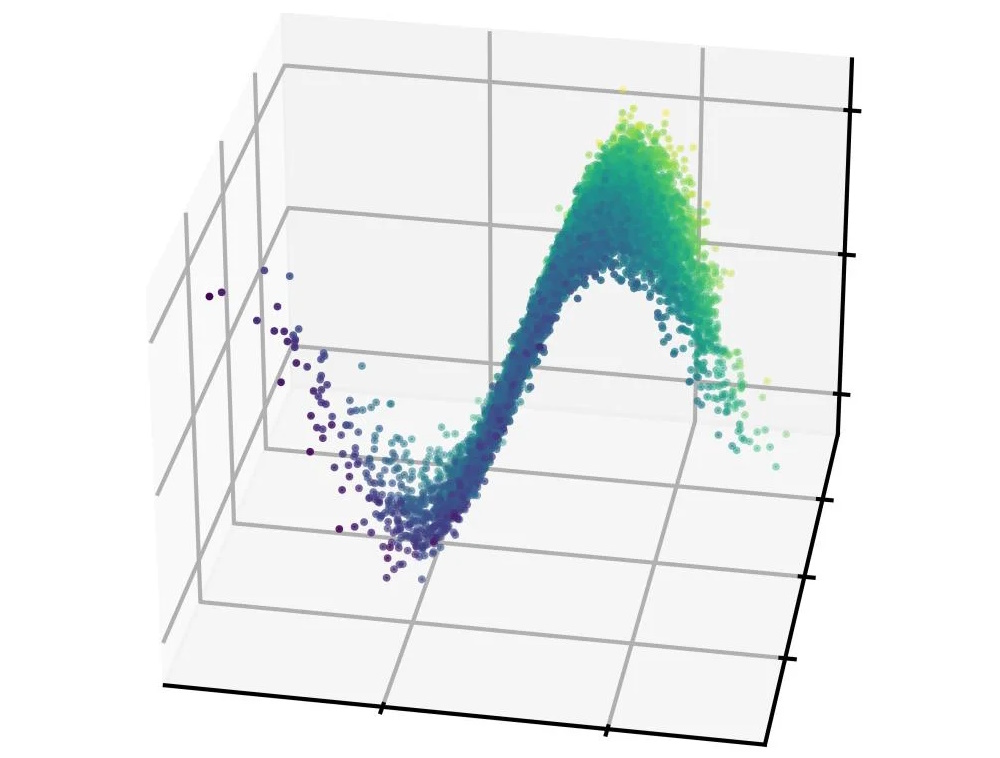
Image Credits: SLAC

Particle physicists are finding interesting ways to apply machine learning to their work: “We’ve shown that we can infer very complicated high-dimensional beam shapes from astonishingly small amounts of data,” says SLAC’s Auralee Edelen. They created a model that helps them predict the shape of the particle beam in the accelerator, something that normally takes thousands of data points and lots of compute time. This is much more efficient and could help make accelerators everywhere easier to use. Next up: “demonstrate the algorithm experimentally on reconstructing full 6D phase space distributions.” OK!

Adobe Research and MIT collaborated on an interesting computer vision problem: telling which pixels in an image represent the same material. Since an object can be multiple materials as well as colors and other visual aspects, this is a pretty subtle distinction but also an intuitive one. They had to build a new synthetic dataset to do it, but at first it didn’t work. So they ended up fine-tuning an existing CV model on that data, and it got right to it. Why is this useful? Hard to say, but it’s cool.

Frame 1: material selection; 2: source video; 3: segmentation; 4: mask Image Credits: Adobe/MIT

Large language models are generally primarily trained in English for many reasons, but obviously the sooner they work as well in Spanish, Japanese, and Hindi the better. BLOOMChat is a new model built on top of BLOOM that works with 46 languages at present, and is competitive with GPT-4 and others. This is still pretty experimental so don’t go to production with it but it could be great for testing out an AI-adjacent product in multiple languages.

NASA just announced a new crop of SBIR II fundings, and there are a couple interesting AI bits and pieces in there:

Geolabe is detecting and predicting groundwater variation using AI trained on satellite data, and hopes to apply the model to a new NASA satellite constellation going up later this year.

Zeus AI is working on algorithmically producing “3D atmospheric profiles” based on satellite imagery, essentially a thick version of the 2D maps we already have of temperature, humidity, and so on.

Up in space your computing power is very limited, and while we can run some inference up there, training is right out. But IEEE researchers want to make a SWaP-efficient neuromorphic processor for training AI models in situ.

Robots operating autonomously in high-stakes situations generally need a human minder, and Picknick is looking at making such bots communicate their intentions visually, like how they would reach to open a door, so that the minder doesn’t have to intervene as much. Probably a good idea.

This week in AI: AI heavyweights try to tip the regulatory scales by Kyle Wiggers originally published on TechCrunch


from TechCrunch https://ift.tt/1YHoiVJ

A new leak suggests iPhone 15 Pro Max will use the same main camera and display tech as the iPhone 14 Pro Max

If you've been around the rumor mill lately, then you'll probably know that one of the major expected innovations to arrive with the iPhone 15 Pro Max has been a new main camera, likely based on the Sony IMX903, 1" sensor. The latest industry insider tip, however, claims that the iPhone 15 will stick with the same IMX803, 48MP 1/1.28", Quad-Bayer camera that the iPhone 14 Pro and Pro Max already have. iPhone 15 Pro MaxM12 Panel(Same as 14PM)imx803(Same as 14PM)3nm A17 BionicLPDDR5 8GB😔— Revegnus (@Tech_Reve) May 27, 2023 That's a bit of a bummer, and so is the rumor that the iPhone 15...


from GSMArena.com - Latest articles https://ift.tt/LVlhviQ

Elon Musk takes Twitter out of the EU’s Disinformation Code of Practice

Twitter has withdrawn from the European Union’s Code of Practice on online disinformation, per the bloc’s internal market commissioner, Thierry Breton.

In a tweet last night — which confirmed earlier reports of Twitter’s impending exit from the EU Code — Breton issued the social media platform with a blunt warning: Telling Twitter it cannot hide from incoming legal liability in this area.

“Twitter leaves EU voluntary Code of Practice against disinformation. But obligations remain. You can run but you can’t hide,” Breton wrote — a reference to obligations the platform is legally required to comply with as a so-called very large online platform (VLOP) under the EU’s Digital Services Act (DSA).

“Beyond voluntary commitments, fighting disinformation will be legal obligation under #DSA as of August 25. Our teams will be ready for enforcement.”

The pan-EU law, which entered into force back in November, requires VLOPs like Twitter to assess and mitigate systemic risks to civic discourse and electoral processes, such as disinformation.

The deadline for VLOPs’ compliance with obligations in the DSA is three months from now.

A request for comment emailed to Twitter’s press office returned an automated reply containing a poop emoji.


Previous management at Twitter signed the platform up to the voluntary EU Code on Disinformation back in 2018. But Twitter’s current owner, billionaire Elon Musk, looks intent on picking a fight with the EU over speech moderation — belying early remarks he made to Breton in person when Musk had claimed to be on board with the bloc’s digital rulebook.

This is an expensive fight for Musk to pick. Breaches of the DSA can attract penalties of up to 6% of global annual turnover.

The Commission has also warned that serious, repeated non-compliance could lead it to block access to a service — which dangles the prospect of Twitter losing access to a region with some 440 million consumers.

The original EU Disinformation Code had committed Twitter to taking steps to combat the spread of false information on its service by targeting associated ad revenue, tacking bots and fake accounts, providing consumers with tools to report disinformation and empowering researchers to study.

In June 2022, the Commission unveiled a beefed-up version and announced a transparency center to monitor adherence to it.

Importantly it also announced that sticking to the Code would count towards signatories’ DSA compliance. So Twitter’s deliberate pulling out now — with just three months til the law bites — signals that it’s flipping the bird at the bloc’s wider digital services rulebook.

Before Musk came along, it’s fair to say Twitter never exactly excelled at quashing bot networks or otherwise purging toxic nonsense. However, since he took up ownership of the platform last fall, after his $44 billion purchase closed, there has been a clear and calculated backsliding — with obviously harmful steps taken by Musk that drive the platform in the opposite direction. Such as drastic cuts to moderation staff and a massive hike in the price Twitter charges external researchers to access to data via its API, thereby impeding the ability of outsiders to study issues like disinformation — to name two of myriad acts of operational vandalism by Musk which have had the effect of destabilizing veracity and encouraging trolls and chaos agents to run amok on Twitter.

The EU fired an early warning shot at Musk, back in November, when it said publicly Twitter had “huge work” ahead of it if it was going to avoid breaching the DSA, including specifically name-checking areas like disinformation. That was followed, in February, with another warning that Twitter was failing to live up to its reporting commitments under the Disinformation Code. So it was probably only a matter of time before Musk formally pulled the plug on the only bit he technically can. 

But while the Code remains voluntary, as noted above, the EU has attached it to wider DSA compliance — as defacto guidance for meeting the latter’s hard obligations for VLOPs to tackle disinformation. So Twitter’s wilful exit cranks up its regulatory risk — essentially inviting the Commission to sanction blatant rule flouting or risk the law become a flop.

As we reported last year, this collision course was always a strong possibility with Musk taking over Twitter.  It’s increasingly looking like an inevitability — one that’s being driven by the billionaire’s goal of advancing a far right political ideology which demands he give succour to disinformation in order that the seeds of anti-democratic conspiracy theories may fly. (As Charlie Warzel put it in a recent Atlantic article: “[Twitter] has unquestionably transformed under [Musk’s] leadership into an alternative social-media platform — one that offers a haven to far-right influencers and advances the interests, prejudices, and conspiracy theories of the right wing of American politics.”)

Musk’s transformation of Twitter into a far right stan site can certainly fly in the US; under constitutional protections for free speech the worst he can do is ruffle a few feathers and drive progression users off his platform (so, basically, hit himself in the pocket-book — albeit, we know he’s got wealth to burn).

But Musk’s trajectory of promotional encouragement for conspiracy bs puts him on a direct collision course with regulators in the EU who have set their stall against blatant anti-democratic manipulation. So strap in for what looks set to be an expensive fight.

Elon Musk takes Twitter out of the EU’s Disinformation Code of Practice by Natasha Lomas originally published on TechCrunch


from TechCrunch https://ift.tt/3GXuO6c

Mysterious Samsung phone pops up on GeekBench running what might be the Exynos 2300 chipset

We've heard details about the upcoming flagship Exynos 2400 already, but it seems like Samsung is also working on what is likely the Exynos 2300. GeekBench listing Last we hear about the Exynos 2300, it was said to rock a rather odd 9-core CPU setup, including one prime Cortex-X3 core, clocked at up to 3.09 GHz, four Cortex-A715 cores, working at 2.65 GHz and four Cortex-A510 ones, with a 2.1 GHz max frequency. A very similar 1+4+4 chip has now appeared in a mysterious Samsung device on GeekBench, going by the SM-S919O model number. While the reported CPU frequencies don't match...


from GSMArena.com - Latest articles https://ift.tt/PWw9Tmj

Motorola Razr 40 allegedly shows up on GeekBench and 3C websites, revealing some specs

We already know quite a bit about the upcoming Moto Razr 40 Ultra. The last major leak revealed its entire specs sheet and also included high-res renders of the phone. We expect to see the Razr 40 Ultra unveiled on June 1 alongside another less-premium device – a vanilla Moto Rarz 40. The regular Razr 40 is a bit more of a mystery. We do have some alleged images and pricing, but today also brings some alleged specs leaks. Motorola Razr 40 leaks A phone going by the XT2323-3 model number was spotted on GeekBench and the 3C websites. The leaks aren’t particularly...


from GSMArena.com - Latest articles https://ift.tt/GkbiruU

Friday, May 26, 2023

Info Edge, reeling from Rahul Yadav’s startup loss, now writes off Bijnis

Info Edge, the largest shareholder in Bizcrum Infotech, the holding firm of Bijnis, has written off its entire investment in the Indian startup, citing “principles of conservatism and prudence,” in the latest drastic market correction in the fast-growing South Asian ecosystem grappling with the weakening global economy.

The publicly listed Indian investor had invested about $9.3 million in the New Delhi-headquartered startup, which has overall raised over $43 million to date and counts Sequoia India, Matrix Partners India, Waterbridge and Westbridge among its backers.

The Series B-stage startup, whose last funding round was disclosed in September 2021, aims to be the “operating system for factories,” helping the plants procedure supplies and also generate demand from buyers and other retailers alike.

Info Edge said it was writing off its investment in Bijnis following the “principles of conservatism and prudence and after due consideration of factors including continuing cash burn, limited availability of cash in proportion to unspecified liabilities with respect to buyback obligations (including liquidation preference) of the company towards investors under the shareholders agreement.”

“However, we will continue to evaluate the position and work with the other shareholders to remedy the situation,” it assured.

Rishabh Katiyar, Principal at Info Edge Ventures, said in a statement to TechCrunch that write-off in Bijnis was “a technical write-off due to the unspecified liabilities” that may materialise “owing to the buyback obligations in the existing shareholders’ agreement signed between the company and the investors.”

He added:

“This liability is contingent in nature and has been factored in based on the conservative accounting policies followed by the company in compliance with IndAS accounting standards. Therefore, this is not a reflection on the company’s financial performance, the market opportunity and the value proposition. Further, this liability would only materialize if the company is unable to provide an exit to the key investors via other exit mechanisms like third party sale, listing, among other mechanisms captured in the agreements by a specified date in future and all the key shareholders together choose to exercise the buyback right as an exit mechanism.”

The announcement follows Info Edge disclosing on Friday a loss of $33.4 million in 4B Networks, another startup it wrote off recently. 4B Networks was founded by Housing.com’s infamous founder Rahul Yadav and Info Edge owned a 57% stake in the newer startup.

The write-offs triggered an overall loss of $8.4 million for Info Edge in the financial year ending March 2023, a sharp departure from the $1.55 billion profit it had posted the year prior. As the Indian news and analysis website The Arc pointed out, this is the first net loss for Info Edge in six years.

Info Edge, reeling from Rahul Yadav’s startup loss, now writes off Bijnis by Manish Singh originally published on TechCrunch


from TechCrunch https://ift.tt/gSkTr5F

YouTube to abandon Stories next month

YouTube Stories will cease to exist from June 26. The temporary post medium is being phased out and all YouTube Stories shared on June 26 will expire in seven days’ time. The accompanying community post suggests that YouTube is removing Stories in favor of YouTube Shorts and Community posts. YouTube Stories demo YouTube believes its Community posts are great for sharing “lightweight updates” and starting discussions among followers while Shorts offer more traffic and subscribers than Stories. YouTube Stories was initially introduced back in 2017 as Reels before its rebrand to...


from GSMArena.com - Latest articles https://ift.tt/6VBSimo